Coaches and expeditions
Coach expeditions: planning the journey between destinations
The itinerary shows the scenery and sightseeing. To choose the right trip, also look at nights in transit, stops and who supports the group when plans change.
“Overnight in transit”: what does it mean for your trip?
You like the destinations, have compared the hotels and notice “overnight in transit” in the itinerary. What happens when you arrive after a night on the coach? The answer helps you understand the whole package. Time for a shower, breakfast, access to your room and the first excursion need to fit the journey that came before.
For travellers, knowing that sequence makes it easier to choose a trip at the right pace. For the agency and carrier, this is where timings, crew, reservations and support need to work together. A good expedition should be clearly explained in the gaps between attractions too.
Start by separating three measures: the journey's duration for the passenger, driving time and each driver's working hours. An advertised 40-hour trip may include boarding, meals, border crossings and other stops. Crew members also have duties beyond driving. Dividing those 40 hours by the number of drivers does not produce a roster.
A staged itinerary makes the discussion concrete. Identify travel legs, visits, stops, nights on the coach and hotel nights, with estimates and room for changes. Travellers can see the pace; organisers can check whether the operation can deliver the trip being sold.
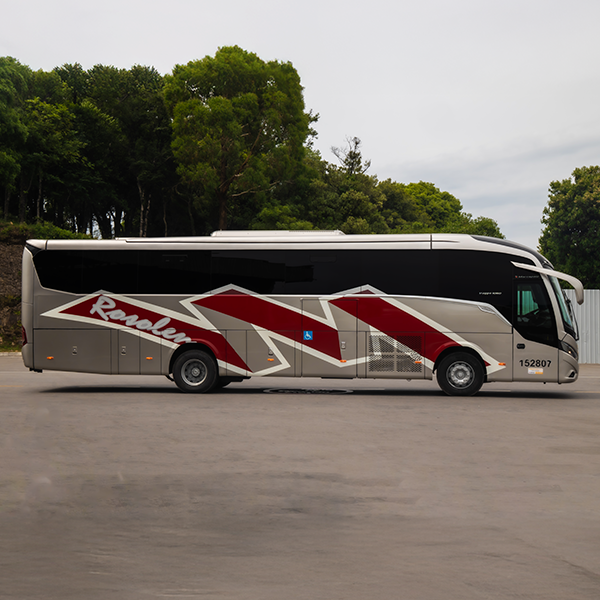
How many drivers travel on a long expedition?
Two drivers appear in real offers. Cultura e Viagens lists this arrangement for the overland stage of its January 2027 Patagonia trip. 2N’s Viagens also advertised two drivers for its September 2026 Bariloche itinerary. These are examples of published offers, not a market average or an audit of those companies' rosters.
The number only becomes meaningful within the itinerary: who drives each stage, where they rest and how changes take place. A carrier can arrange a crew travelling with the group, relief drivers at support points, overnight stops and supplementary local transport. The combination needs to cover the full trip, including journeys at the destination.
Imagine arriving in the morning, then sightseeing in the afternoon and taking a transfer to dinner. The group has arrived; the work continues. If the drivers from the road journey need to rest, someone must be assigned to those movements. That is a more useful conversation than accepting “there are two drivers” as the answer to everything.
When hiring, ask the carrier for a validated operating plan for the itinerary you will sell. As a passenger, look for a clear explanation of rest arrangements, stops and transport at the destination. You do not need to design a professional roster to see whether the package explains how those parts fit together.
Taking turns at the wheel and meeting rest requirements
As a general Brazilian reference, PRF guidance published in January 2026 sets out, for drivers transporting passengers, at least 30 minutes of breaks for every four hours of driving and 11 continuous hours of rest in 24 hours. The carrier must validate the actual roster under the applicable regime and each professional's duties.
One legal point matters when considering a two-driver crew. In ADI 5.322, Brazil's Supreme Federal Court invalidated legal provisions allowing rest in a moving vehicle. In its 2024 clarification judgment, the Court reaffirmed collective bargaining concerning reductions or splitting of the break within a working day, known in Brazil as the intrajornada interval. That is not automatic permission to take the required daily rest while the coach keeps moving.
In practical terms, seeing the second driver lying down does not establish that the statutory rest has been fulfilled. The roster needs to identify rest periods and places that comply with the rules. These references concern Brazil; an international operation must also check the rules relevant to its route.
There are different ways to organise the service. The itinerary, the carrier's resources and working conditions determine which arrangement fits.
| Planned arrangement | How to assess the proposal |
|---|---|
| Crew accompanies the group | Check driving, other duties and each professional's rest throughout the itinerary |
| Relief at a support point | Specify the location, timing and availability of the crew taking over |
| Overnight stop en route | Align arrival, crew accommodation and the next departure |
| Supplementary local transport | Agree who operates excursions while the main crew rests |
Adding drivers may be part of the solution, but “two” or “three” can never replace that plan. The required number follows from a workable roster for the particular trip.
Will the stop be ready when your group arrives?
Putting a stop on a map is easy. What changes the experience is knowing whether toilets, food, parking and access will be available when the coach gets there. A restaurant that can accommodate a few visitors may need different arrangements to serve the whole group in time to continue.
When comparing quotes, establish which meals are included and which are paid separately. In the schedule, allow time for everyone to get off, be served and board again. That allowance should reflect the group and the facilities, rather than assuming every stop takes the same number of minutes.
For nights in transit, explain where travellers can attend to personal hygiene. An onboard toilet does not mean a shower. If showers are planned at a stop, confirm availability, conditions and any charge before presenting them as part of the trip.
The same applies on arrival at the hotel. Reaching the city early does not automatically release a room before the agreed check-in time. Luggage storage, a waiting area, breakfast or early check-in may need separate arrangements. Knowing this before departure can even change what passengers pack in their hand luggage.
For the crew, a passenger stop is not necessarily rest. A sightseeing visit may create a rest window when the professionals are genuinely free from duties and the schedule meets the applicable rules. The itinerary needs to accommodate both sides.
The coach must fit the route, and the luggage must fit the coach
Before confirming the vehicle, look beyond passenger capacity. The carrier needs to check dimensions and access to the planned hotels, attractions, parking areas and crossings. If a stage requires another vehicle or a different drop-off point, include that in the quote and the information given to the group.
Luggage requirements change between trips too. A shopping itinerary may bring more bags on the return journey; sports equipment uses space differently; a series of hotels makes clear bag identification especially useful. Seat count alone answers none of these questions.
Agree the limits with the supplier and tell travellers before they buy or reserve. Passengers should keep documents and items needed during the journey accessible, following the hand-luggage guidance. For the agency, organising identification and unloading helps avoid turning each arrival into a lengthy search for the final suitcase.
Discuss boarding and seating needs from the start. Confirm how the actual vehicle's arrangements work, including access to the seat and onboard facilities. On a double-decker, examine each deck and the route to the toilet as well as the stairs.
Our guide to seats and coach comfort helps compare interiors; the plans of real configurations help explain the layout. Use them as references in the supplier discussion, then have the vehicle assigned to your trip confirmed.
Driver, guide and agency: who can help?
Passengers do not need an organisation chart. They need to know whom to ask. The agency aligns the programme, bookings, suppliers and communication; the carrier manages transport operations. Driver and guide responsibilities should be clear so that questions and changes reach someone who is available to deal with them.
Brazil's Ministry of Tourism Ordinance 37/2021 describes guides' activities in accompanying, orienting and informing visitors. Ask for the guide’s identification and proof of registration; the official Cadastur page explains the registration requirements. Working as a guide-driver has its own conditions: check qualifications and whether the contracted duties can be carried out, rather than adding tasks simply because one person is on the coach.
A briefing before departure can remove much of this uncertainty: who answers timing questions, who follows up a luggage issue and which contact to use if someone becomes separated from the group. Drivers need to concentrate on driving; passenger support should have an agreed route.
A border crossing belongs in the itinerary
An international expedition involves documents for travellers and documents for the transport operation. The ANTT international charter guide addresses both, including authorisations, passenger lists, vehicles, inspections and insurance. Checks must match the countries and the actual operation being booked.
For travellers, preparation starts before packing. Nationality, age and destination affect the requirements. The agency gives guidance, while passengers obtain their documents and report changes to their details. Minors and specific circumstances require checking the competent official source, rather than relying only on a document used on a previous trip.
On the road, crossing hours and conditions may affect the programme. Argentina provides an official international border crossing status service. The operator should monitor route conditions and revise plans when needed. An estimated arrival helps organise the day; it does not guarantee how long inspection will take.
Even snacks need attention. Chile's SAG requires declarations of animal and plant products and assesses their entry. Commercial packaging does not automatically remove the declaration requirement. Advance guidance gives passengers time to understand what they are carrying and what must be declared.
What happens if the coach or programme changes?
Maintenance, inspections and crew compliance form part of the operator's obligations described by ANTT. At booking stage, also understand support away from base: the assistance contact, how it is called and the conditions for replacing the vehicle. A proposal becomes more useful when it explains how service will continue.
If the coach is changed, check capacity, seat classes, layout, accessibility, luggage space and equipment. Consider someone who booked a single seat and is given a place in a pair. Even if there are enough seats for everyone, there is a difference that needs addressing and explaining.
Delays also affect hotels, restaurants and attractions. Decide who contacts those suppliers, who approves adjustments and how the group will receive updates. Clear information, even while an estimate is being revised, helps passengers understand the next step.
These arrangements belong in the budget. Responsibility for crew costs, tolls, parking, crossings and local support needs to be clear. The Ouro e Prata charter enquiry form, for example, asks whether the customer will cover drivers' meals and accommodation. Compare quotes with the same scope, using our guide to coach costs per kilometre to understand the components.
A good booking starts with a clearly explained trip
Travellers and organisers see the same trip from different angles. Bringing those views together makes the booking clearer and prepares the service.
| Passengers need to understand | The operation needs to organise |
|---|---|
| How many nights are on the coach and in hotels | A compatible itinerary, accommodation and driver roster |
| Which seat and services they have bought | Confirmed configuration and supplier terms |
| Where stops, meals and additional costs occur | Facilities, timings and responsibilities |
| Which documents and luggage limits apply | Advance guidance and checked information |
| Who provides support and communicates changes | Contacts, assistance and communication throughout the trip |
That information then needs to follow the bookings. The passenger list should reflect who is boarding; the rooming list, which allocates hotel rooms, needs to match the hotel arrangements; documents and boarding information should be available to the responsible team.
This is where OnWay Expeditions, the trips module, helps organise trips, passengers, bookings, seats, documents and finances. For fleet operations, OnWay Fleet, the fleet module, brings together vehicles, driver records, document expiry dates, maintenance and availability. Legal roster checks and each country's requirements remain with the responsible professionals.
The platform is evolving around the needs of trip organisers and vehicle operators. To learn about the modules and discuss your operation, talk to OnWay on WhatsApp.
Frequently asked questions
Are two drivers enough for a 40-hour journey?
The number alone does not answer the question. The carrier needs to validate the full plan, considering driving, other duties, driver changes and rest. Two drivers appear in real offers, but that does not guarantee an appropriate roster for every 40-hour itinerary.
How often does the coach stop?
The itinerary should show planned stops and meet the rules applicable to driving and crew rest. Meals, personal hygiene, borders and route conditions also shape the schedule. Ask for the plan for the particular trip you are booking.
Does a night in transit count as a hotel night?
No. It means that night will be spent travelling. Check hotel nights separately and confirm when you can access your room on arrival, especially when the coach arrives early.
Who pays for drivers' accommodation and meals?
The quote and contract should assign responsibility between the customer and carrier. These costs can change the comparison between offers; check the scope before choosing solely by the total.
What should I check if the coach is replaced?
Seat numbers and classes, layout, accessibility, luggage space and onboard services. The organiser should explain how differences affect bookings, including passengers who chose an individual seat or a particular deck.
Sources and research method
Sources accessed on 29 October 2026.
- PRF: coach inspections and driver rest. Official guidance published on 22 January 2026.
- Brazilian Supreme Federal Court: ADI 5.322 judgment. Official news report dated 5 July 2023.
- Brazilian Supreme Federal Court: ADI 5.322 clarification ruling. Ruling dated 14 October 2024; official copy hosted by TRT6. Summary, pages 2–3.
- ANTT: guide for charter transport companies. Requirements concerning operations, crews, vehicles and documentation.
- ANTT: international charter transport guide. Guidance for passengers and operators.
- Argentina: international border crossings. Official information on crossing locations and operating status.
- Chile’s SAG: declaration of animal and plant products. Declaration and inspection requirements when entering Chile.
- Brazilian Ministry of Tourism: Ordinance 37/2021. Professional activities and categories of tour guides.
- Gov.br: tour guide registration. Professional registration and relevant regulations.
- Cultura e Viagens: Argentine and Chilean Patagonia. January 2027 offer specifying two drivers for the road segment.
- 2N’s Viagens: Bariloche in September 2026. Offer specifying two drivers; an example, not an operational audit.
- Ouro e Prata: charter enquiry form. Enquiry about responsibility for crew meals and accommodation.